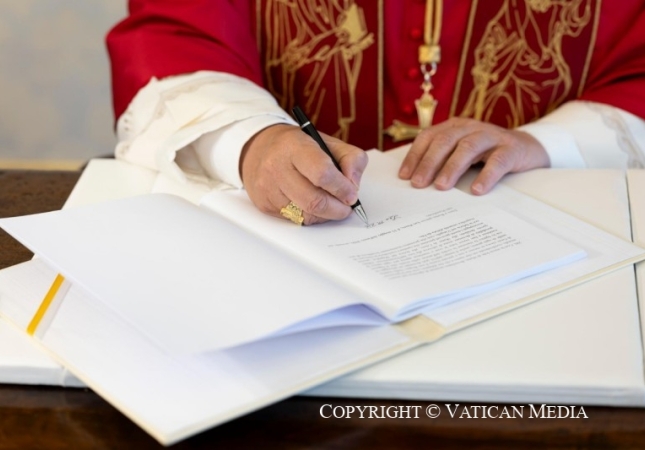
The encyclical - "Magnifica Humanitas: On Safeguarding the Human Person in the Time of Artificial Intelligence" - develops the Churchʼs social teaching in light of artificial intelligence, situating new questions of human dignity, labor, and the common good within the tradition that runs from Rerum Novarum through Centesimus Annus and Laudato Si'.
Download and read the full encyclical as a PDF below.
Magnifica Humanitas Full Text English Version
Archbishop Paul S. Coakley, president of the U.S. Conference of Catholic Bishops (USCCB), issued a statement today (May 25) welcoming Pope Leo XIV’s new encyclical.
Archbishop Coakley’s statement follows:
“The Church in the United States welcomes the publication of Pope Leo XIV’s first encyclical letter, Magnifica Humanitas, with gratitude and praise. It is a powerful reminder that no technology can replace a child of God, and all technology should be placed at the service of helping humanity thrive.
"As his predecessor Pope Leo XIII addressed the challenges of the Industrial Revolution in Rerum Novarum one hundred thirty-five years ago, our Holy Father shines the light of the Gospel and the tradition of the Church on the new opportunities and challenges posed by the rise of Artificial Intelligence. The Pope calls us to never lose sight of the inherent dignity of all human life and the moral imperative for technology to support peace and the common good rather than the limited interest of a few.
“Recognizing the importance of this issue to the Holy Father and to us all, the Administrative Committee of the United States Conference of Catholic Bishops tasked the USCCB Committee on Doctrine to lead and coordinate our work regarding Artificial Intelligence. It reflects the Catholic belief that the dignity of the human person is inviolable.
“My brother bishops and I look forward to prayerfully reading the encyclical more deeply over the next few days. We encourage all people of good will to reflect on this rich papal teaching and to seek ways in which to apply it in their lives.”
Presentation of Pope Leo XIV’s Encyclical Magnifica Humanitas from the Vatican | May 25, 2026
Pope Leo XIV’s AI Encyclical Explained (w/ Fr. Gregory Pine)